
Tablet, dass auf einem Zeitungsstapel liegt
©

Press releases

„H2 cross border” – hydrogen delivery from Austria to Germany still faces hurdles – Germany lacks a register of origin

Press release | Vienna, 4 February 2026


  • Successful deliveries: Since September 2024, green hydrogen has been delivered from Austria to Germany via pipeline.
  • Significant increase in quantities recently: At the end of January 2026, around 630 MWh were delivered.
  • Regulatory hurdle: Cross-border transfer of guarantees of origin is not possible due to the lack of a register in Germany.
  • Harmoniszation urgently needed: The rapid implementation of a certificate of origin register in Germany and the acceleration of harmonization between Austria and its neighboring countries is essential.


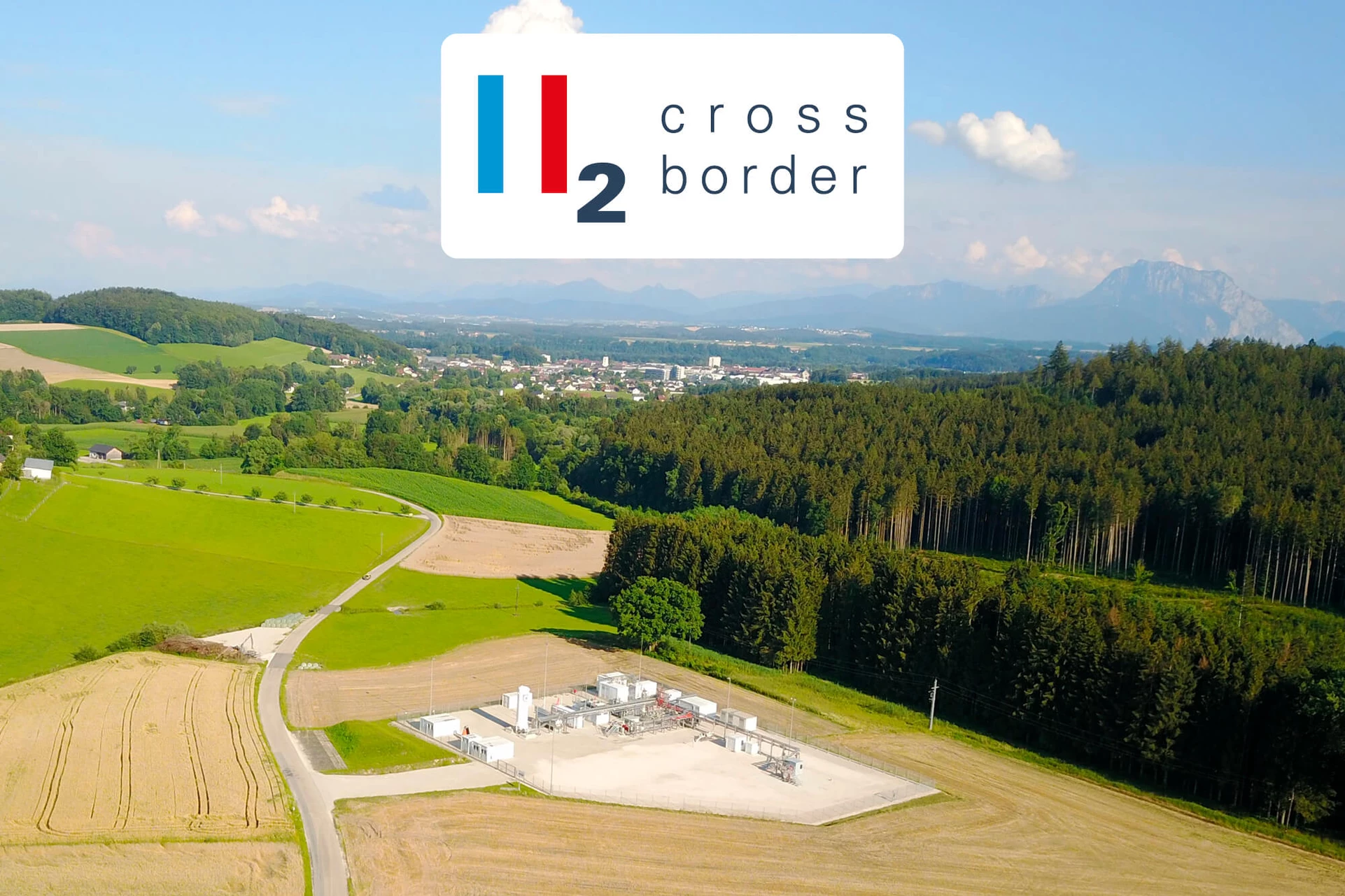
The “H2 cross border” hydrogen project successfully maps the entire hydrogen value chain, from production and storage to transport and delivery to the end consumer. It shows that the cross-border pipeline transport of green hydrogen from Austria to Germany is possible under the existing technical and regulatory framework. 

At the same time, it is clear that the market ramp-up continues to be slowed down by a lack of regulatory requirements, in particular the lack of a register of origin in Germany.

“We have shown that cross-border hydrogen deliveries work technically and operationally. The fact that there is still no functioning register of origin in Germany and that the Federal Environment Agency has not communicated a clear timeline is significantly slowing down the market ramp-up and sending a problematic signal to investors and project developers,” emphasizes Dr. Matthias Jenn, Managing Director of bayernets GmbH. “Without a tradable and interoperable registry, green hydrogen remains a regulatory stopgap in a cross-border context.”
 

©

Significant increase in delivery volumes

The “H2 cross border” project was launched in 2021 by its initiators, RAG Austria AG and bayernets GmbH, with the aim of establishing the entire value chain for hydrogen across national borders for the first time. Subsequently, the MEGGLE Group was successfully acquired as a customer, and Shell Energy Deutschland GmbH joined the project as a partner.

Since 2024, the green hydrogen produced by RAG using water electrolysis and certified by TÜV Süd has been added to the existing natural gas network in Austria and transferred to the bayernets transport network in Burghausen. With the support of Shell Energy, the hydrogen is finally forwarded to MEGGLE.

At the end of January 2026, around 630 MWh of hydrogen was delivered from Austria to Germany via pipeline. This means that the volume has increased almost sixfold since the first delivery in September 2024.

Lack of a register in Germany as a key regulatory hurdle

Despite this proven cross-border delivery model, the project partners continue to face a significant regulatory hurdle: the transfer of guarantees of origin across national borders is not yet possible. Specifically, guarantees of origin issued in Austria cannot be transferred to Germany. The reason for this is the lack of a compatible guarantee of origin register in Germany.

While RAG and MEGGLE are duly registered in the Austrian certificate of origin database implemented and operated by E-Control, the certificates issued cannot be transferred to a German register. As a result, the certificates of origin remain on the Austrian account and cannot be used or credited by the customer in Germany.

An official inquiry by the project partners to the Federal Environment Agency, which is responsible for implementing the German guarantee of origin registry, has so far failed to obtain binding confirmation that it will be operational in 2026. Accordingly, further delays are to be expected.

The German Federal Environment Agency is slowing down the ramp-up of hydrogen through excessive bureaucracy. We need cross-border recognition of green hydrogen now in order to continue implementing projects. Our partners are ready to move forward – but without an immediate rethink, necessary investments and scaling projects will remain blocked,” emphasizes Markus Mitteregger, CEO of RAG Austria AG.

Prerequisites for hydrogen market ramp-up

In order to accelerate the market ramp-up of hydrogen, shorter administrative channels and an intensive cross-border exchange of know-how between the companies and authorities concerned are still required. Without functioning, practical, and efficient registers of origin, there will be no cross-border market integration of hydrogen, which would enable cross-border tradability and eligibility. The project partners are therefore calling for the rapid implementation of a register of origin in Germany and accelerated harmonization of the systems between Austria and its neighboring countries.

Learn more about the project