Contact

Mag. Elisabeth Kolm
Press Relations Officer
T +43 50 724-5448

Send E-mail

PRESS CONFERENCE: 'Energy Policy Positions of Upper Austria's Industry'

Print

15.03.2011 | Pressrelease

PRESS CONFERENCE: 'Energy Policy Positions of Upper Austria's Industry'

Panelists: Dipl.-Ing. Klaus Pöttinger (President, Federation of Upper Austrian Industries), Dr. Leo Windtner (Chief Executive Officer, Energie AG Oberösterreich), Dipl.-Ing. Markus Mitteregger, MBA (Managing Director, RAG Rohöl-Aufsuchungs AG), KommR Viktor Sigl (Upper Austrian Regional Minister for Economic Affairs)

Now is the time for an appropriate definition of Upper Austria's role within a European energy strategy!

Linz, Haus der Industrie (3 December 2010).  Energy will be a topic of tremendous importance in the coming decade – An ideology-free, objective approach is essential for meaningful energy policy measures – Energy mix to be defined from a European, not a regional perspective – Hydropower, gas storage, and strong expertise in energy and environmental technologies are strengths of Upper Austria that need to be endorsed.


Due to its multi-faceted nature, energy policy will be one of the decisive factors for industry in the decade to come. Security of supply, economic efficiency, technology and innovation, environment and climate will be the dominating issues in the years ahead. "As a result of the large number of issues to be addressed, combined with political ideologies and client politics Austria took measures in the past that have now turned out to be inefficient and even counter-productive for reaching the defined targets", explains Dipl.-Ing. Klaus Pöttinger, President of the Federation of Upper Austrian Industries (IV OÖ).
Only an energy policy approach integrated into the European context makes sense to Upper Austria. A mix of energy sources is instrumental to security of supply, economic efficiency and climate protection – but such an energy mix has to be defined from a European, not a regional perspective, as former German Foreign Minister and Vice-Chancellor Joschka Fischer recently underlined in a lecture he held in Linz. It is the strengths of regions that have to be utilised and promoted individually. "An everything-everywhere strategy" is an absolutely wrong approach", stresses Mr. Pöttinger.
At the moment, Austria is confronted with heavy dependence on energy imports averaging 70 per cent of the country's total energy demand and a negative carbon balance. At the same time, the past two decades saw extremely stringent requirements on building new hydropower plants for electricity generation, while promotion of new energy technologies in Austria remained at an inadequate level due to inefficient methods such as the Eco-Electricity Act. These factors illustrate, as the President of IV OÖ says: "Energy policy needs a wide-ranging strategic concept that takes into account both security of supply and economic efficiency, fully promotes the development of new energy and environmental technologies and, through the funds invested, provides the best possible benefit for the environment and climate."

 
Dr. Leo Windtner, CEO of Energie AG:
Energie AG Oberösterreich has always been committed to sustainable, clean generation of energy. The company has produced energy from hydropower, fossil and new, regenerative sources of energy for more than 100 years. "Future power supply will come from renewable sources", says Leo Windtner, CEO of Energie AG. However, he also urges to be realistic when it comes to identifying targets and implementing energy strategies. "We are committed to those targets", says Mr. Windtner, but also refers to the risks hidden in the large number of strategy documents: "We should not promote technologies that are not commercially feasible, just because they fit the current general mood", says Mr. Windtner. Compulsory minimum quota, such as for energy generation from wind power or linking housing grants to the installation of solar facilities is something Mr. Windtner rejects: "We must not make the mistake of artificially driving up prices of hydropower or energy from thermal power plants just to force energy technologies into the market that are simply not marketable at the moment. This would artificially raise electrical energy prices and that is of no benefit to consumers or industry."

Energy is the basis of quality of life and the engine of economy
Secure supply of electrical energy is the pillar of our quality of life and a strong economy. One of the priorities of Energie AG is to strengthen and secure domestic production. From its very beginning, the company has been committed to offer a flexible energy mix, that is to generate energy from, and provide an ideal combination of, hydropower, thermal power and renewables (solar energy, wind power, biomass). The main focus of Energie AG is on further investments where sustainability and responsibility towards future generations play a key role.
"What we need is flexible generation to secure supply with electricity on a sustainable basis and for many generations to come", says Mr. Windtner. He is convinced that existing potentials must be harnessed now. By building Austria's then largest biomass-fired power plant in Timelkam, Energie AG made a major step towards that end already many years ago. Austria's largest solar power plant opened officially in Eberstalzell (district of Wels-Land) last September was a sign to use renewable energy sources and another proof of Energie AG's pioneering role in that field.
Alternative Energies need to be stored
However, constant expansion of alternative forms of energy such as wind power and solar energy involves several problems: It is particularly the highly fluctuating output of such power generation systems caused by changing weather conditions that requires storage of the energy they generate. The only feasible technology that has been tried and tested over decades and remains the most efficient method is the use of pumped-storage power plants. Their benefit: The amount of energy that is not consumed at the time of generation is used to pump water from a lower-elevation to a higher-elevation reservoir and can be drawn from there to cover peak demand to generate electricity. "Storage power plants are indispensable for maintaining the new energy network", says Mr. Windtner. Building new reservoirs is the only way to take full advantage of a flexible energy mix.
Energie AG takes part in the expansion of the Malta power plant group in Carinthia. Together with Verbund AG and KELAG, Energie AG is building the Reisseck 2 pumped-storage power plant in the Malta valley. "But we are about to implement such projects in Upper Austria as well. The first step is planning a pumped-storage power plant in Ebensee", says Mr. Windtner.
Clear commitment to hydropower
Expansion of hydropower – the most efficient and environmentally friendly of all energy sources – is another key element of Austria's energy future. This is why Energie AG continues its decades-long commitment in the field of hydropower and is currently preparing four projects. One of them is the Oflek power plant located between the municipalities of Großarl and Hüttschlag in the Pongau region, which is already under construction and scheduled to go on-stream in the summer of 2011. Other run-of-river power plant projects such as those located in Bad Goisern, Stadl-Paura and the sister power plant of Oflek in the Kleinarl valley are being prepared or about to be implemented shortly.
Energie AG has always been a model company when it comes to using hydropower and alternative, regenerative sources of energy. Hydropower plants deliver more than half of all the electricity generated. "We advocate hydropower expansion with a good sense of proportion and in harmony with the environment and nature", says Mr. Windtner, underlining Austria's fortunate position to have ample reserves of the "champion" of all renewable forms of energy.
To Mr. Windtner the main focus is on the sustainability of investments: "Some of our hydropower plants have produced clean energy for more than 100 years – without doing even the slightest harm to the environment. Hydropower delivers energy for entire generations!" It is due, above all, to the farsightedness and sense of responsibility of the previous generations that Austria, and in particular Upper Austria, can now count on the strong pillar of hydropower. "Hydropower is a privilege we must make use of if we want to determine our energy future on our own", Mr. Windtner is convinced. The beauty of hydropower is that companies create long-term values without the use of tax money which will last for decades and centuries and will be available to future generations as well.

No enery future without  fossil energy
Despite the clear commitment to hydropower and alternative energy sources, Mr. Windtner does call for a realistic approach to planning the country's energy future: "We all know that renewable energies are the way forward. But we have to realise today that the supply of electricity cannot be secured without energy from fossil energy sources in the next decades." It is above all natural gas that will play a bridging function on the road to future energy supply.
Mr. Windtner says there is no doubt that, apart from using natural gas in the Timelkam  power plant, the power plant site in Riedersbach is an indispensable component for security  of electricity supply in Upper Austria. Currently, both power plants, Riedersbach I (year of construction: 1969) and Riedersbach II (year of construction: 1986) produce energy from coal. Due to investments in new, state-of-the-art control systems and efficient flue-gas cleaning plants, the coal-fired Riedersbach II power station is a showcase project for thermal energy generation from coal.
Similar to the Timelkam site, the coal-fired power station built in 1969 is to be substituted by a state-of-the-art, high-performance and environmentally friendly combined gas-and-steam power plant. The required planning process is already underway and the environmental impact assessment for the project has also been initiated. The site of the power plant in the district of Braunau, offering total production capacities of more than 220 MW, is a major pillar for Upper Austria's security of supply.


Dipl.-Ing. Markus Mitteregger, MBA, Managing Director of RAG:
Gas is a future energy source and partner of renewable energies
For many decades, RAG has made a major contribution to Upper Austria's security of supply with crude oil and natural gas, and is an important employer of high economic standing. "We believe it is our mission to use natural resources oil and gas carefully and in a responsible manner and to create the best possible added value. This year, we look back on 75 years of operational success, which is not something that just occurs naturally, but rather is the result of our high standards, technological innovative strength, extraordinary commitment of our employees, a sound ownership structure and, finally, the excellent neighbourhood in Upper Austria", says Dipl.-Ing. Markus Mitteregger, Managing Director of RAG Rohöl-Aufsuchungs AG, underlining the strong regional ties RAG has in Upper Austria.
Over one billion Euros was spent in the past ten years to invest in RAG operations, revival of crude oil production and construction of new storage facilities. The number of employees more than doubled in recent years. In 2010 alone, around 200 million Euros were invested, creating not only a strong employment incentive for the supplier sector, but also durable and permanent jobs. Currently, RAG has around 400 direct employees and some 500 indirect employees, most of them in Upper Austria and Salzburg. Another 1000 persons were and are employed at construction sites of RAG.
Domestic gas and oil are essential to Upper Austria's industry
Natural gas is the number one energy source for Upper Austria's industry. In total, one fifth of the entire Austrian gas consumption is accounted for by Upper Austria, more than half is needed by the region's high-performance industrial enterprises. Not only is Upper Austria the country's national export champion, but also the leading industrial region. "Those figures clearly illustrate that reliable, environmentally friendly and cost-efficient energy supply is indispensable to the Upper Austrian industry, but also of decisive economic significance for all of Austria", says RAG Managing Director Markus Mitteregger, emphasising the relevance natural gas has for Upper Austria.
"It is the energy-intensive sectors such as steel, paper or aluminium production that need energy on demand, around the clock and, wherever possible, without any negative impact on the climate. This saves costs and safeguards the production process", continues Mr. Mitteregger, underlining that "there is no such thing as fully carbon-neutral generation of energy. What is important is to go for energy forms that have the least impact on the climate. This is where natural gas comes in handy".
RAG has produced domestic crude oil in Upper Austria for more than 55 years. Using new technologies, production of oil, a precious commodity for industry, has been increased again in recent years. Application of 3D seismic surveys helps to detect and develop new fields, so that domestic crude oil production will be maintained over the next decades.
Gas storage facilities are the backbone of security of supply
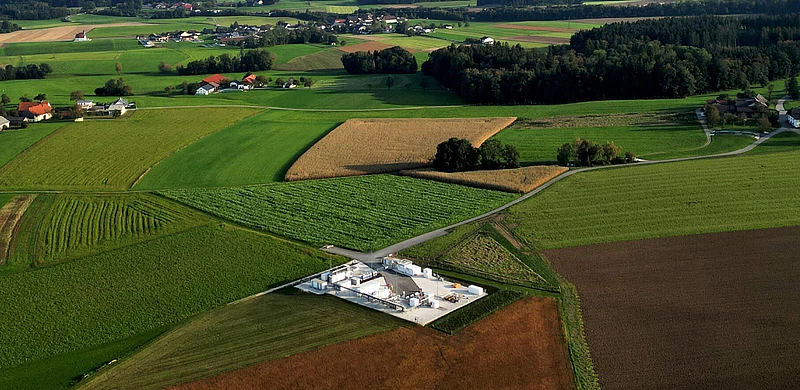
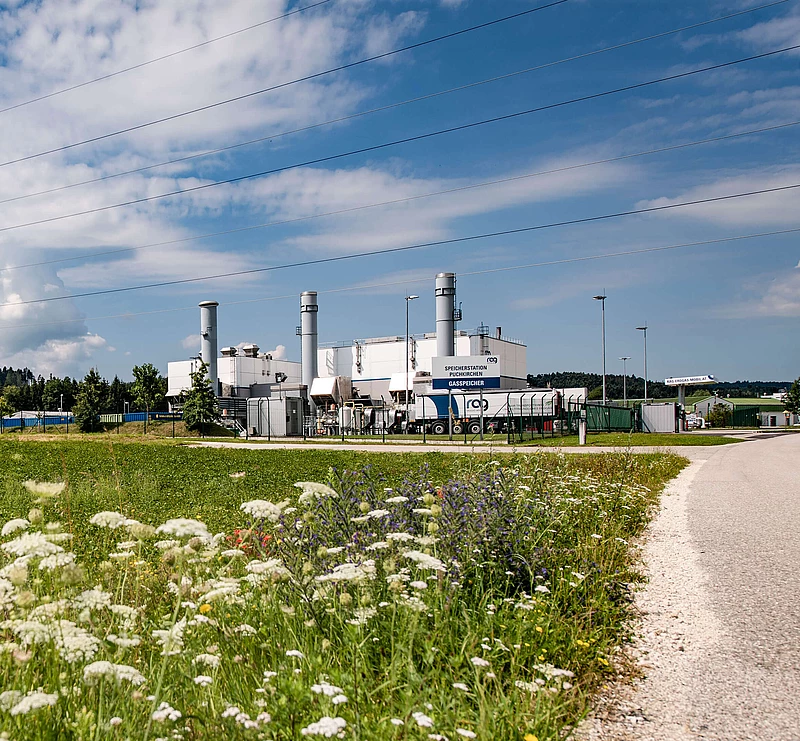
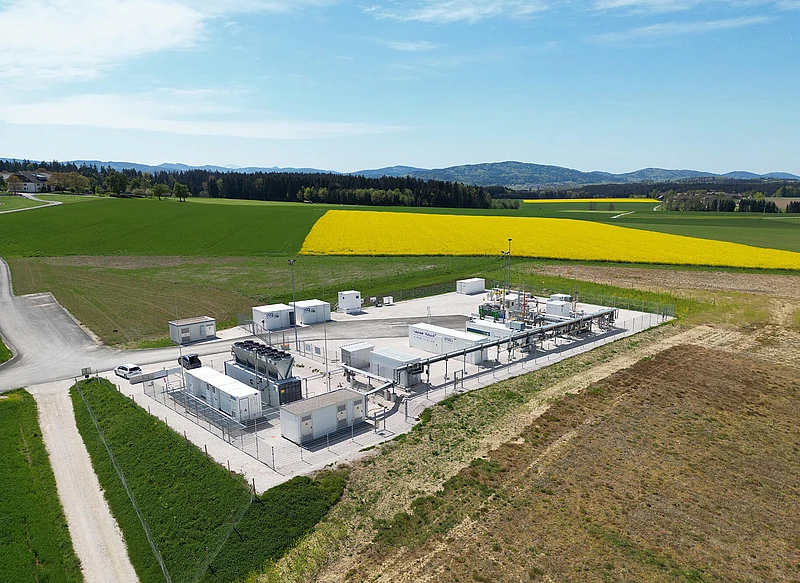
It is the former underground gas storage sites located in Upper Austria that make Austria a leader in terms of security of supply, as Upper Austria, in particular, has geological structures perfectly suited for underground gas storage.
In order to maintain and further increase the high level of security of supply also in future years, RAG invests in the expansion of existing storage facilities and additional projects in Upper Austria and Salzburg, while at the same time stepping up domestic oil and gas production by using two own drilling rigs. By 2011, RAG-operated storage facilities will deliver gas storage capacities of approximately 5 billion cubic metres, representing more than half of Austria's annual gas consumption. This makes RAG one of Europe's five largest gas storage facility operators, and storing gas is one of the key business areas of RAG.
Upper Austria is an engery storage region
"Upper Austria has a chance of becoming a LEADING energy storage region in Europe in the next years", explains Mr. Mitteregger. This is of essence with regard to compliance with the Austrian Energy Strategy 2020, because the higher the share of renewable energy sources in the total energy mix becomes, the more natural gas has to be stored as a backbone, so it can be used at once should wind wheels and solar plants not be able to produce electricity due to adverse weather conditions. "Natural gas and gas storage facilities are indispensable for industry and electricity generation in power plants, and they are indispensable as a strong partner for renewable energy sources. Expanding underground gas storage to secure supply mainly of electricity is therefore more important than ever before", continues Mr. Mitteregger. The optimal approach is efficient interaction to substantially improve the total energy balance.
Moreover, natural gas is set to be available for centuries and efforts are made to produce gas synthetically.
Demand for natural gas on the rise - a European responsibility
"The past two years of economic crisis were an exceptional situation, so we should not be misled by short-lived slumps in demand. All experts agree that global demand for natural gas will continue to go up – to a lesser extent in Europe, but more strongly first of all in Asia", says Mr. Mitteregger, explaining why forward-looking energy planning is important to Austria and the European Union. What is of particular relevance in this respect is to allow unrestricted "flow" of internationally traded energy forms gas and electricity from and to Austria. "Due to its very wide and economically significant options to store energy - pumped storage facilities and underground gas storage - Austria has an enormous potential to establish itself as an energy hub in the centre of Europe, an opportunity we should certainly take. What we need here is to fully integrate intra-Austrian gas grids into one market area", says Mr. Mitteregger, who thinks that full liberalisation of European energy markets and new energy infrastructure institutions which are increasingly coordinated centrally from Brussels and which pursue a long-term approach in planning are of vital importance.


KR Viktor Sigl, Regional Minister for economic affairs:
Upper Austrian industry as a growth engine for green jobs
Offensive continued in the field of green energy, environmental technology and energy efficiency
Upper Austria continues its offensive course in the field of environmental technology, green energy and energy efficiency. "Our innovative companies are the engine of growth for green jobs. It is the industry that creates such green jobs", illustrates Viktor Sigl, Regional Minister for Economic Affairs. This requires fitting overall conditions – and here Mr. Sigl refers to an enormously strong triangle set up for that purpose in the past ten years: The Eco-Energy Cluster, the Environmental Technology Cluster and the Network Energy Efficiency are valuable partners and networks for Upper Austrian companies. Another addition are focus programmes such as the Energy Contracting Programme or the Energy Technology Programme run by the government of Upper Austria.
Not only have Upper Austrian companies established themselves as innovators and technological leaders in those areas throughout Europe and globally, but they have also created added value and, most notably, jobs in our region. By national standards, Upper Austria is the number one in Austria concerning green jobs due to strong companies and institutions. This is the impressive result of a major survey conducted by Statistik Austria in October. "Upper Austria takes a clear lead throughout the environmental industry, generating sales of around 6.8 billion Euros and over 35,800 green jobs. And this is what we want to continue and expand", announces Mr. Sigl. Therefore, it is absolutely clear that Upper Austria will make an active contribution to the new "Master Plan Green Jobs" presented by Federal Minister Niki Berlakovich, says Mr. Sigl. A task force commissioned by the regional government early in summer to develop a strong green job programme thus has to fulfil a particularly important task to create ideal overall conditions. Results and proposals of the task force should be available by early 2011.
Another major focus, Viktor Sigl says, is on basic education and further training, enhancing employee skills in the companies. Company-operated basic and further training programmes in the field of environmental technology and renewable energies should contribute green job skills to their expert competence.
What is important, continues Mr. Sigl, is to accelerate and promote the high innovative strength of companies in the sectors of environmental technology, green energy and energy efficiency. "Promoting innovation is a key impetus for sustainable developments, products and services." Using targeted promotion schemes such as the "easy2innovate" subsidy programme, the Energy-Technology-Programme (ETP), the Start-Up subsidy scheme of FFG and the Upper Austrian government, the "eco bonus" of the Upper Austrian Research Promotion and subsidies granted for cooperation under cluster initiatives, state funds are used effectively to support innovation projects.
Moreover, Mr. Sigl underlines, it is essential to push ahead with networking and cooperation schemes of companies: within the Environmental Technology Cluster, the Eco-Energy Cluster and the Network Energy Efficiency that is going to be continued.
"Also, we will develop the energy contracting programme of the Upper Austrian government to make it even more attractive to SMEs", announces Mr. Sigl.
Upper Austria plays an absolutely pioneering role in the field of renewable energy and environmental technology, which is confirmed by the fact that Upper Austrian companies account for about 23 per cent of Austria's entire sales volume in this sector of industry.
But Upper Austria also intends to make a strong commitment to the future market of e-mobility. This is why an Austrian beacon project on e-mobility will be implemented by the Automotive Cluster in Upper Austria. With their CMO (Clean Motion Offensive) Upper Austrians have convinced the Climate and Energy Fund and were awarded a 4.4 million Euro subsidy scheme. 13 project partners – most of them from Upper Austria – cooperate under the CMO scheme. The project volume totals 9 million Euros, the target is to offer low-cost electromobility. 


Dipl.-Ing. Klaus Pöttinger, President of IV OÖ (Federation of Upper Austrian Industries) :
5 fields of energy policy action for Upper Austria from the industry's perspective
One thing is sure to industry: It needs security of supply, on the one hand, and competitive energy prices to maintain its energy-intensive production in Austria in the long run. On the other hand, Upper Austria has a large number of industrial enterprises with a strong expertise in energy and environmental technologies. What is important to them is to be at the forefront in this rapidly growing global market. From the perspective of IV OÖ, this involves five fields of action:
1. Expansion of hydropower!
With its dependence on imports accounting for 70 per cent of total energy demand, Austria is far above the European Union average rate of 53 per cent. This is mainly due to the fact that hydropower was hardly expanded over the past two decades. "Austria has rivers and mountains, which allows us to build run-of-river power plants and pumped-storage power plants. We need both types of hydropower to cover the growing electricity demand for electricity and to reduce our dependence on imports", explains the President of IV OÖ. What is more, hydropower is the only renewable form of energy that makes a significant contribution to electricity generation in Austria from an economic perspective, while at the same time allowing to improve the country's carbon balance. IV OÖ clearly advocates construction of the four pumped-storage power plants currently being planned and calls for rapid implementation of the highest possible share of the identified domestic potential of 2,750 GWh of conventional hydropower.
2. Expansion of underground gas storage!
Natural gas is the key energy source for Upper Austria's industry. As Managing Director Mitteregger has explained, Upper Austria has ideal geological structures to store gas. Further expansion of underground gas storage provides a clear strategic positioning of our country within the European context and increases security of supply for the companies operating here. "In addition to the highly urgent expansion of hydropower, we continue to bank on reliable, highly efficient and environmentally friendly gas-fired power plants", says Mr. Pöttinger.
3. Promoting renewable energies - but in the right way!
The third issue, according to IV OÖ, is to promote renewable energy sources in the European context. "It makes much more sense to build large-scale photovoltaic plants in the south of Europe or in North Africa, and wind power plants at the North and Baltic Sea than in Austria, where efficiency is low. What is important is to provide strong funds for research and investments by Upper Austrian companies in this sector – resulting in substantially higher added value and job creation effects", says Mr. Pöttinger. "At the moment we see extremely inefficient promotion via feed-in tariffs, which rather hampers than supports innovation at the expense of companies and households", underlines Mr. Pöttinger. According to Mr. Pöttinger principles of market economy should be applied to renewable energies as well: "Solar and wind energy are no longer kids that have to be looked after, but adults who have to pay for themselves."
4. Energy and environmental technologies are new fields of expertise!
The globally booming market for innovative energy and environmental technologies offers tremendous export opportunities. Similar to mechatronics, energy and environmental technologies have to developed into fields of expertise of the Upper Austrian industry, where education, research and production can be built and expanded jointly. "This is where the public sector can make a contribution by creating framework conditions, such as research funding and establishing new university institutes and study programmes so we can grow together in this respect", requests the President of IV OÖ.
Expansion of the new field of expertise, energy and environmental technology, as demanded by IV OÖ, would automatically create additional green jobs in Upper Austria. Mr. Pöttinger says it is important for the regional government to change its approach to this area: "It is not politics that creates jobs, it's industry – and in Austria mainly through successful export performance. It makes much more sense to promote research and innovation in this area and to set up the overall conditions for strong growth in this field of industrial expertise than to spend a lot of tax money to operate eco-electricity plants that are inefficient due to the unfavourable climate conditions in Upper Austria", says Mr. Pöttinger.
5. Increasing energy efficiency!
70 per cent of primary energy gets lost by the time it reaches the end consumer. There is enormous potential for energy efficiency that has to be unlocked and that will help us to reach our energy and climate protection targets. Consistent reduction of energy consumption such as by using innovative drive technologies, higher levels of efficiency in electricity generation, in thermal renovation of buildings, in light-weight construction or energy-saving production processes must be the focal issues", concludes IV OÖ President Dipl.-Ing. Klaus Pöttinger.


Further inquiry note:
Industriellenvereinigung Oberösterreich
Dipl.-Ing. Dr. Joachim Haindl-Grutsch, j.grutsch@iv-net.at
Tel. (0732) 781 976-0